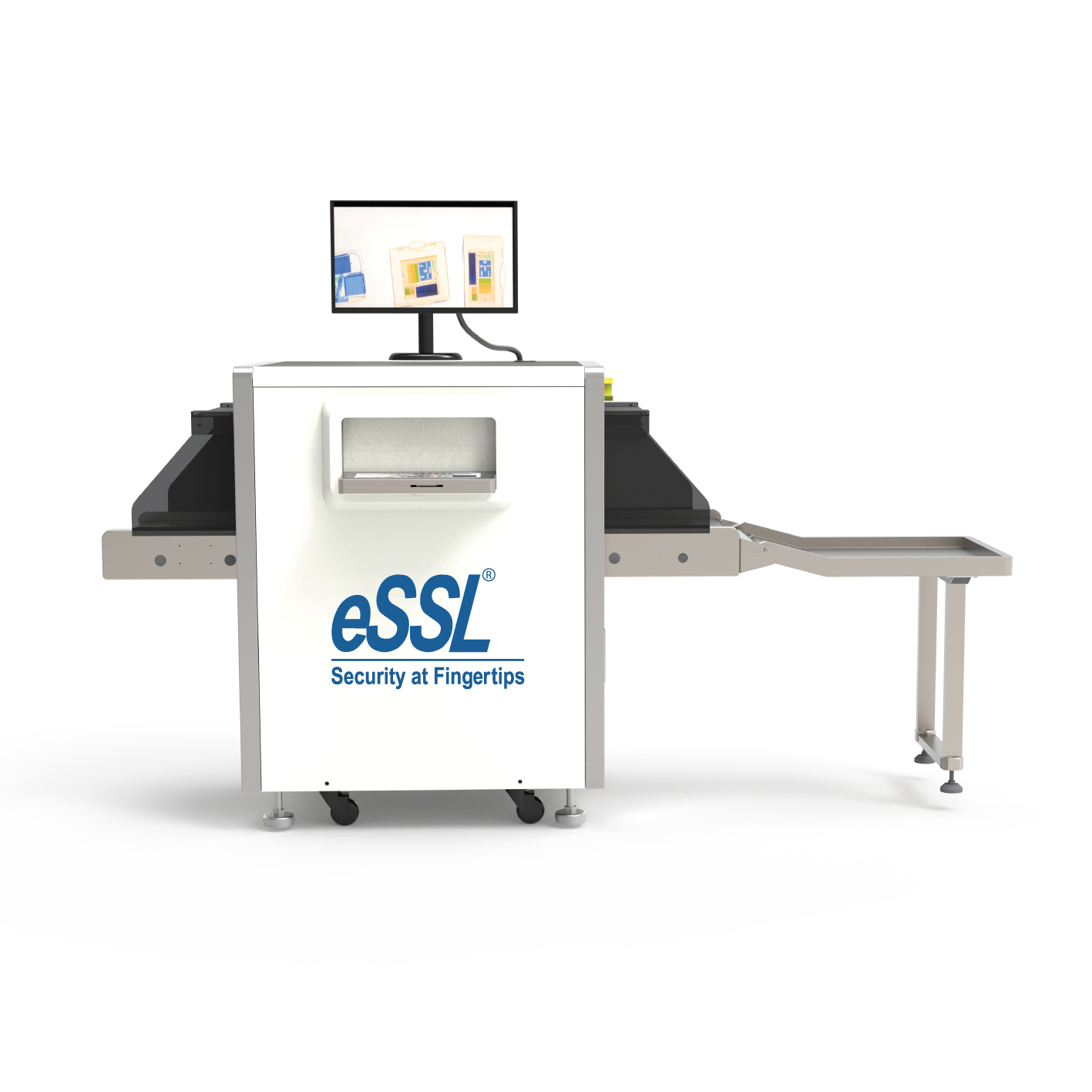
Baggage Scanner – X‑Ray Security Screening for a Safer World
A baggage scanner (X‑ray baggage inspection system) is the first line of defence in modern security. It non‑invasively examines luggage, parcels, and cargo for hidden threats. This page explains how baggage scanners work, where they are used, why they are essential, and why eSSL is the right partner for your baggage screening needs.
What is a Baggage Scanner?
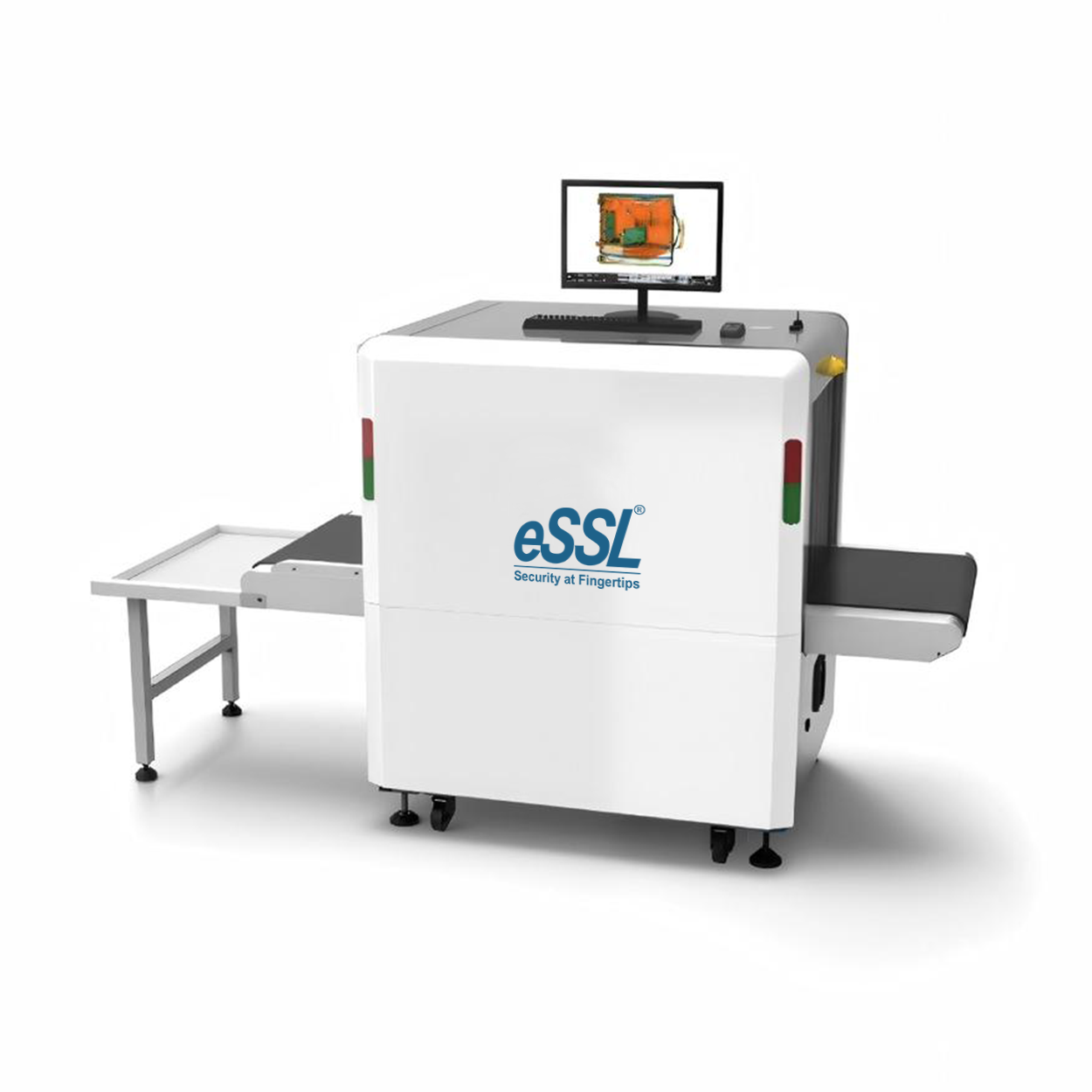
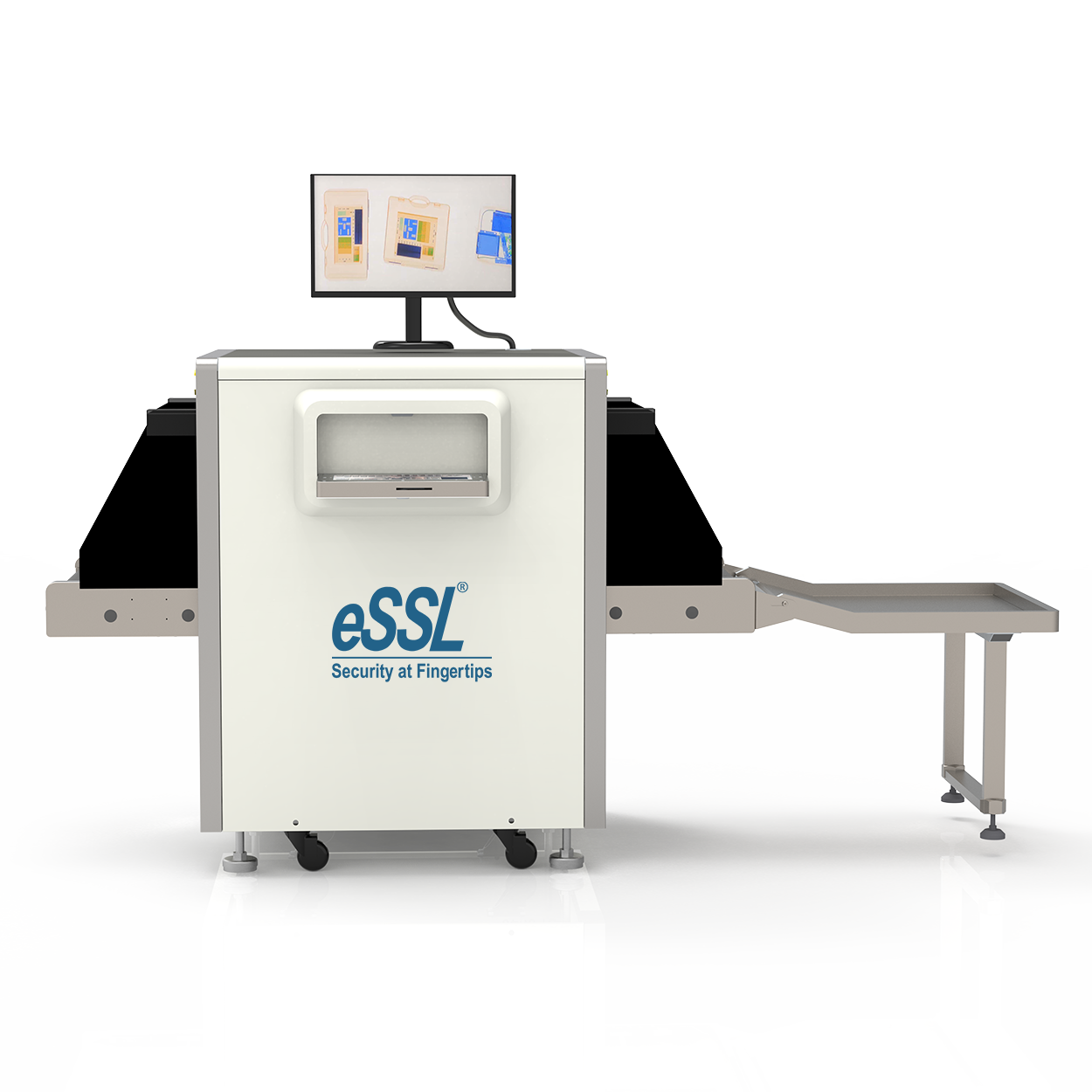
A baggage scanner (also known as an X‑ray baggage scanner or luggage scanner) is a security screening device that uses X‑ray technology to create detailed images of the contents of bags, suitcases, cartons, and parcels without having to open them. The scanner transmits an X‑ray beam through the item; different materials absorb X‑rays differently, producing a high‑contrast image on a monitor. Security personnel trained in image interpretation can quickly identify prohibited items such as weapons, explosives, flammable liquids, or contraband.
Modern baggage scanners are indispensable for airports, metro stations, shopping malls, hotels, government buildings, and any facility concerned with public safety. They are fast, reliable, and safe for both operators and the items being scanned.
⚙️ How Does a Baggage Scanner Work?
📦 Conveyor & Trigger
A baggage item is placed on a conveyor belt. As it enters the X‑ray tunnel, an internal sensor triggers the X‑ray source automatically – no manual button press required.
A baggage item is placed on a conveyor belt. As it enters the X‑ray tunnel, an internal sensor triggers the X‑ray source automatically – no manual button press required.
🔦 X‑Ray Penetration
The X‑ray generator emits a controlled beam that passes through the baggage. The degree of attenuation (weakening) depends on the density and atomic number of the materials inside.
The X‑ray generator emits a controlled beam that passes through the baggage. The degree of attenuation (weakening) depends on the density and atomic number of the materials inside.
🎨 Digital Imaging & Material Discrimination
An L‑shaped detector array captures the transmitted X‑rays and converts them into a digital signal. The system assigns colours based on material composition: organic materials (e.g., plastics, food, explosives) appear orange; inorganic materials (e.g., metals, glass) appear blue; mixed materials appear green.
An L‑shaped detector array captures the transmitted X‑rays and converts them into a digital signal. The system assigns colours based on material composition: organic materials (e.g., plastics, food, explosives) appear orange; inorganic materials (e.g., metals, glass) appear blue; mixed materials appear green.
🖥️ Image Enhancement & Storage
Operators can use tools like edge enhancement, zoom (up to 64×), high/low penetration, and colour inversion to inspect suspicious areas. Images can be stored for audit trails (often up to 100,000 images).
Operators can use tools like edge enhancement, zoom (up to 64×), high/low penetration, and colour inversion to inspect suspicious areas. Images can be stored for audit trails (often up to 100,000 images).
🔑 Key Features & Capabilities
✅ High‑Resolution Imaging
Advanced detectors provide 24‑bit colour depth and high wire resolution (38‑40 AWG), revealing fine details such as thin wires or needle‑like objects.
Advanced detectors provide 24‑bit colour depth and high wire resolution (38‑40 AWG), revealing fine details such as thin wires or needle‑like objects.
✅ Adjustable Penetration
Operators can increase or decrease penetration power to examine dense objects or see through metallic shielding.
Operators can increase or decrease penetration power to examine dense objects or see through metallic shielding.
✅ Large Tunnel Sizes
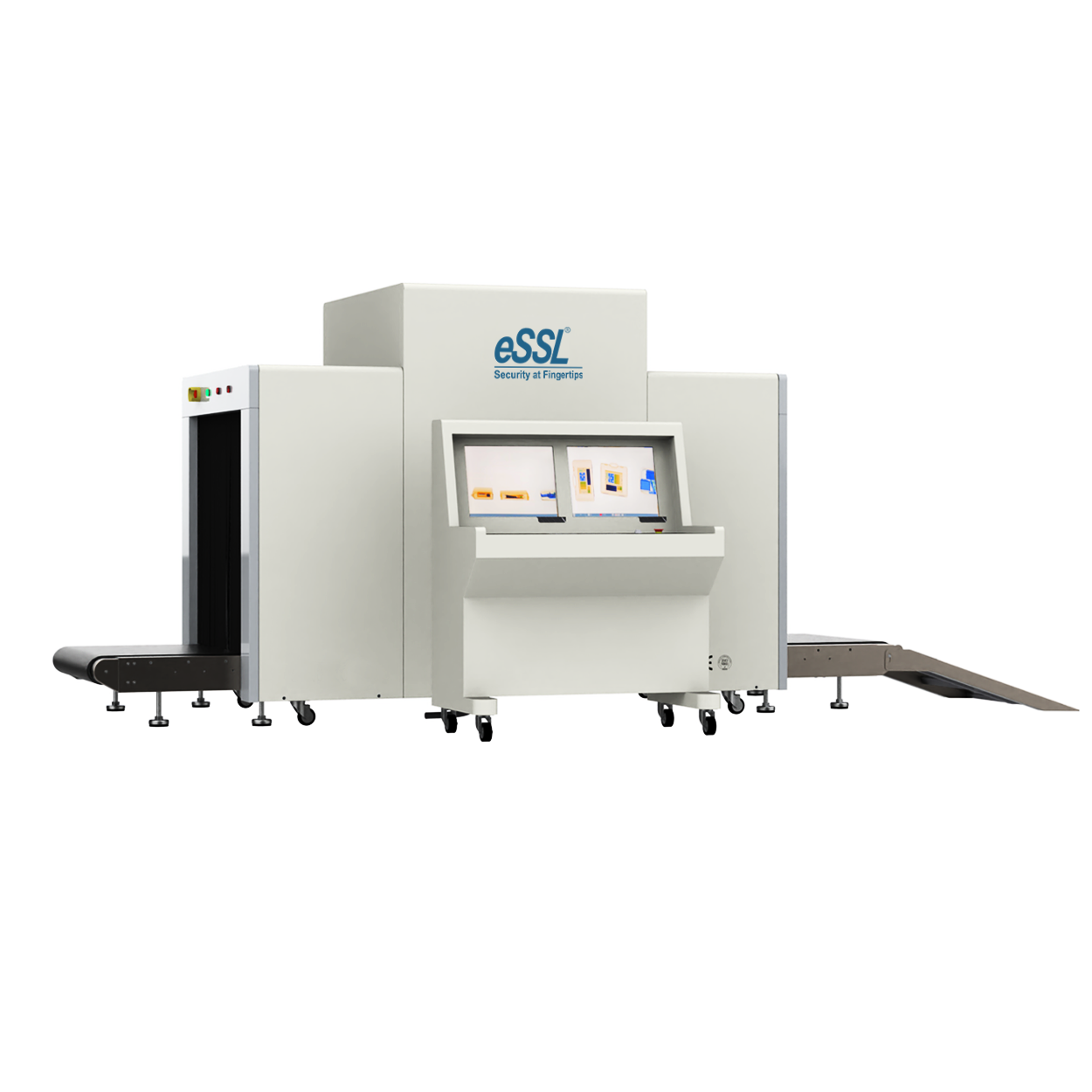
From 500×300 mm for hand luggage up to 1000×1000 mm for cargo pallets, there is a compatible scanner for every need.
From 500×300 mm for hand luggage up to 1000×1000 mm for cargo pallets, there is a compatible scanner for every need.
✅ High Throughput & Heavy Loads
Conveyor speeds of 0.2–0.25 m/s and load capacities from 100 kg to 300 kg (for cargo models) enable efficient screening of high traffic volumes.
Conveyor speeds of 0.2–0.25 m/s and load capacities from 100 kg to 300 kg (for cargo models) enable efficient screening of high traffic volumes.
✅ LAN Connectivity
Network‑ready scanners allow remote image review, centralised management, and integration with access control or ERP systems.
Network‑ready scanners allow remote image review, centralised management, and integration with access control or ERP systems.
✅ Safety & Low Radiation
X‑ray leakage is kept below international safety limits (<1 μGy/h). The system is film‑safe for ISO 1600 film and presents no health risk to passengers or operators.
X‑ray leakage is kept below international safety limits (<1 μGy/h). The system is film‑safe for ISO 1600 film and presents no health risk to passengers or operators.
🏢 Where Are Baggage Scanners Deployed?
✈️ Airports
Checked and cabin baggage screening, air cargo inspection – the most common and demanding use case for baggage scanners.
Checked and cabin baggage screening, air cargo inspection – the most common and demanding use case for baggage scanners.
🚉 Metro & Railway Stations
Fast, high‑throughput screening of passenger luggage at public transport hubs to prevent weapons or explosives from entering trains.
Fast, high‑throughput screening of passenger luggage at public transport hubs to prevent weapons or explosives from entering trains.
🏨 Hotels & Commercial Buildings
Secure lobbies, loading bays, and service entrances by scanning all incoming bags, parcels, and deliveries.
Secure lobbies, loading bays, and service entrances by scanning all incoming bags, parcels, and deliveries.
🏛️ Government & Public Buildings
Courthouses, legislative buildings, embassies, and municipal offices use baggage scanners to screen visitors and staff.
Courthouses, legislative buildings, embassies, and municipal offices use baggage scanners to screen visitors and staff.
🏭 Industrial & Logistics Facilities
Prevent theft, check outgoing cargo, and inspect incoming supplies at factories, warehouses, and distribution centres.
Prevent theft, check outgoing cargo, and inspect incoming supplies at factories, warehouses, and distribution centres.
🎡 Events & Stadiums
Temporary security checkpoints at concerts, sports events, and exhibitions rely on portable or fixed baggage scanners.
Temporary security checkpoints at concerts, sports events, and exhibitions rely on portable or fixed baggage scanners.
🌟 Why Choose eSSL as Your Baggage Scanner Partner?
➤ Proven Technology
eSSL’s X‑ray baggage scanners are built on years of engineering experience, using high‑quality components and advanced imaging algorithms to deliver clear, actionable images.
eSSL’s X‑ray baggage scanners are built on years of engineering experience, using high‑quality components and advanced imaging algorithms to deliver clear, actionable images.
➤ Wide Product Portfolio
From compact 500×300 mm units for small facilities to 1000×1000 mm cargo scanners, eSSL has a solution for every security checkpoint.
From compact 500×300 mm units for small facilities to 1000×1000 mm cargo scanners, eSSL has a solution for every security checkpoint.
➤ Smart Features for Operators
One‑key shutdown, auto‑fault diagnosis, infrared energy‑saving sensors, and network connectivity reduce maintenance costs and increase uptime.
One‑key shutdown, auto‑fault diagnosis, infrared energy‑saving sensors, and network connectivity reduce maintenance costs and increase uptime.
➤ Compliance & Safety
All eSSL baggage scanners meet international radiation safety standards (CE, RoHS) and are designed for safe operation in public areas.
All eSSL baggage scanners meet international radiation safety standards (CE, RoHS) and are designed for safe operation in public areas.
➤ Local Support & Training
Our Pune‑based team provides site surveys, installation, operator training, and long‑term maintenance to keep your security checkpoint running smoothly.
Our Pune‑based team provides site surveys, installation, operator training, and long‑term maintenance to keep your security checkpoint running smoothly.
➤ Integration Ready
eSSL baggage scanners can be linked to access control systems, ERP platforms, and HRMS software (Spine, GreytHR, HROne, Oracle, etc.) for unified security management.
eSSL baggage scanners can be linked to access control systems, ERP platforms, and HRMS software (Spine, GreytHR, HROne, Oracle, etc.) for unified security management.
❓ Frequently Asked Questions – Baggage Scanner
Is a baggage scanner safe for health? Does it emit harmful radiation?
Yes, baggage scanners are completely safe for both operators and the general public. They are heavily shielded, and the X‑ray leakage is less than 1 μGy/h – well below international safety limits. The radiation dose received by a piece of baggage is extremely low, and there is no residual radiation after scanning. It is safe for food, electronics, and film.
Can an X‑ray baggage scanner damage my laptop, camera, or phone?
No. The energy level of airport‑style X‑ray scanners is deliberately set to be harmless to electronic devices. Thousands of laptops, phones, and cameras pass through such scanners every day without any damage. The same applies to photographic film up to ISO 1600.
What types of threats can a baggage scanner detect?
Baggage scanners can detect a wide range of threats, including firearms, knives, explosives, flammable liquids, pressure containers, narcotics, and other contraband. Advanced material discrimination helps operators distinguish between organic, inorganic, and mixed substances, improving detection accuracy.
How fast can a baggage scanner process bags?
Typically, standard baggage scanners operate at a conveyor speed of 0.2–0.22 m/s, which translates to approximately 600–800 bags per hour, depending on operator efficiency and bag spacing. High‑throughput models can process even more.
What is the difference between single‑energy and dual‑energy baggage scanners?
Single‑energy scanners produce greyscale or limited colour images based on density. Dual‑energy scanners use two X‑ray energy levels, allowing precise material discrimination (organic vs. inorganic vs. mixed) and better detection of explosives and narcotics. eSSL offers both types to suit different budgets and threat levels.
How do I select the right baggage scanner for my facility?
Key factors include the maximum size of baggage you need to screen (tunnel dimensions), the required throughput (conveyor speed and load capacity), and your budget for single vs. dual‑energy technology. eSSL experts can conduct a site survey and recommend the optimal model for your security level and operational flow.