UHF Reader – The Complete Guide to UHF RFID Reader Technology
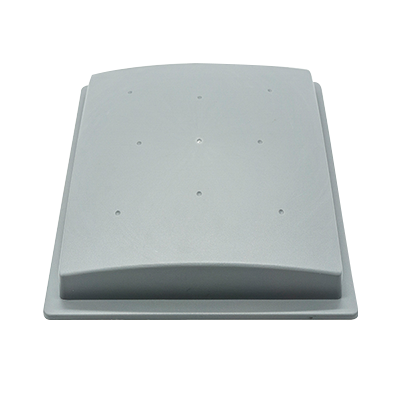
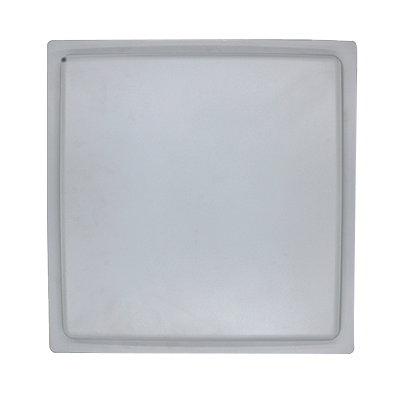
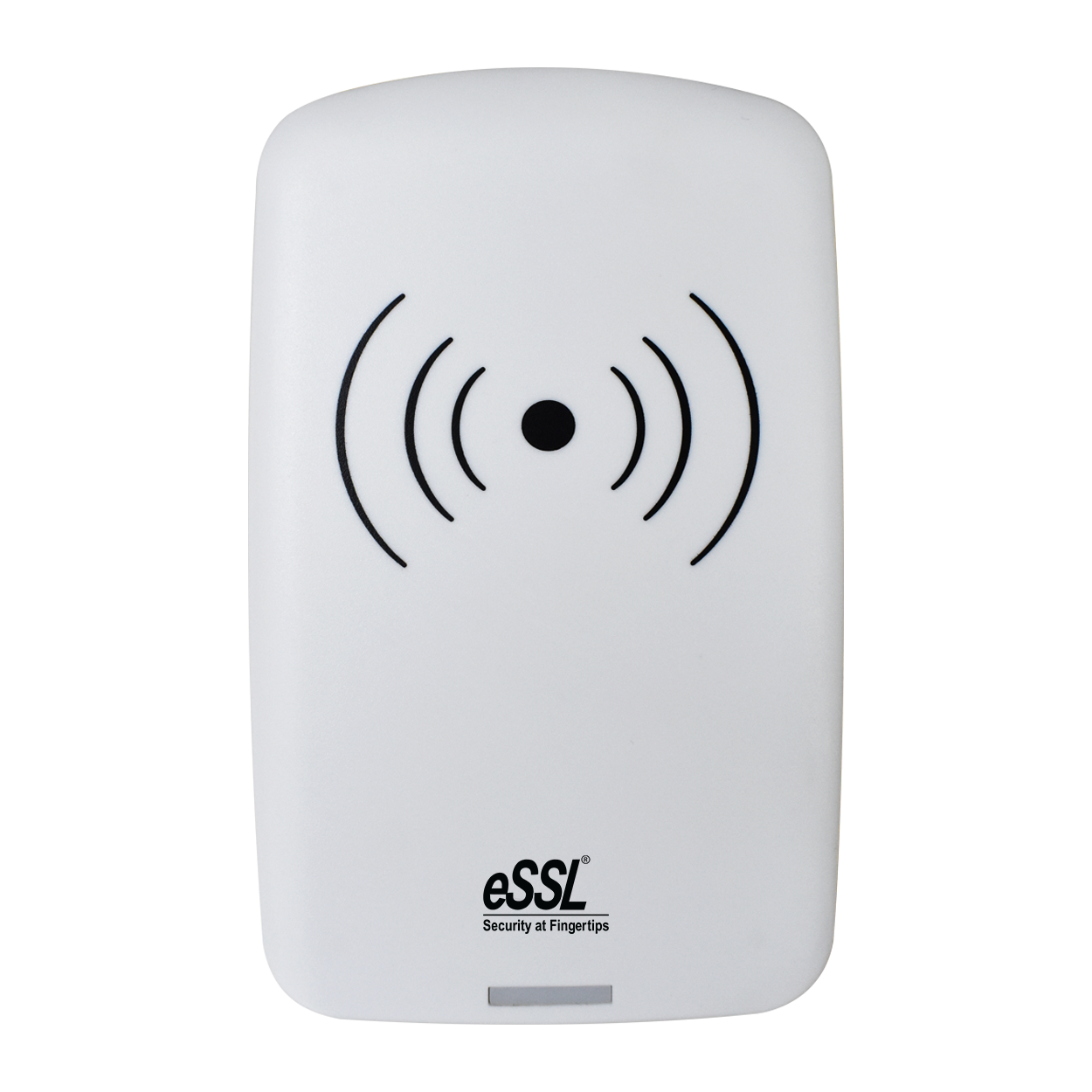
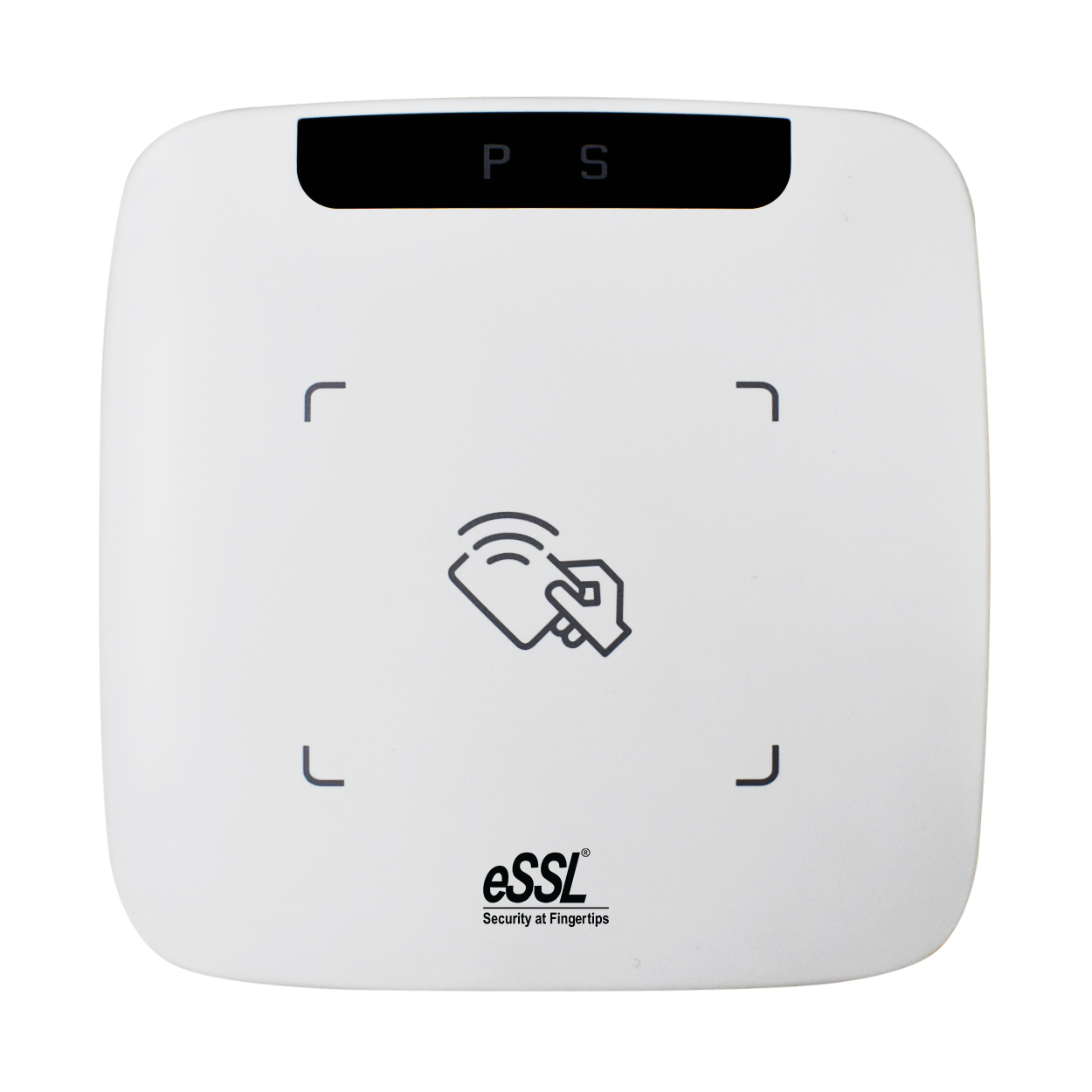
The UHF reader is at the heart of modern automatic identification systems. Operating in the ultra‑high frequency band (860‑960 MHz), these devices enable long‑range, high‑speed, and hands‑free reading of passive RFID tags. From vehicle access control and parking management to logistics, retail, and industrial automation, UHF RFID readers are transforming the way organisations track assets, manage entry, and capture data.
📡 What is a UHF Reader?
A UHF reader (also known as a UHF RFID reader) is a device that uses radio waves in the 860–960 MHz frequency band to communicate with RFID tags. Unlike barcode scanners, which require a direct line of sight, UHF readers can identify tags from several metres away without needing the tag to be visible or precisely oriented. Most UHF readers are passive systems, meaning the reader provides the RF energy that powers the tag, eliminating the need for batteries on the tag side and drastically reducing maintenance costs.
⚙️ How a UHF Reader Works
📡 1. RF Field Generation
The UHF reader generates an electromagnetic field at its chosen frequency (e.g., 865–868 MHz ETSI or 902–928 MHz FCC). This field is radiated by the reader’s antenna, creating an interrogation zone.
The UHF reader generates an electromagnetic field at its chosen frequency (e.g., 865–868 MHz ETSI or 902–928 MHz FCC). This field is radiated by the reader’s antenna, creating an interrogation zone.
🏷️ 2. Tag Activation & Backscatter
When a passive UHF RFID tag enters the field, it harvests energy from the reader’s signal to power its internal chip. The tag then modulates and reflects (backscatters) its unique ID back to the reader.
When a passive UHF RFID tag enters the field, it harvests energy from the reader’s signal to power its internal chip. The tag then modulates and reflects (backscatters) its unique ID back to the reader.
📶 3. Decoding & RSSI Measurement
The reader demodulates the backscattered signal, decodes the tag’s EPC (Electronic Product Code), and measures the received signal strength (RSSI) to estimate tag proximity.
The reader demodulates the backscattered signal, decodes the tag’s EPC (Electronic Product Code), and measures the received signal strength (RSSI) to estimate tag proximity.
🔗 4. Data Transmission
Using standard interfaces like Wiegand 26/34, RS232, RS485, or Ethernet, the reader outputs the tag data to a connected access control panel, PLC, PC, or cloud server for real‑time processing.
Using standard interfaces like Wiegand 26/34, RS232, RS485, or Ethernet, the reader outputs the tag data to a connected access control panel, PLC, PC, or cloud server for real‑time processing.
📊 UHF vs. HF – Why Distance and Speed Matter
| Feature | UHF RFID Reader (860‑960 MHz) | HF RFID Reader (13.56 MHz) |
|---|---|---|
| Typical Read Range | 3 – 15 metres (up to 12 m with standard passive tags) | 10 – 50 cm (near‑field) |
| Multi‑Tag Read Speed | >50 tags/second (batch reading, logistics portals) | Limited (typically 10‑20 tags) |
| Interference Susceptibility | Higher (metal, liquids), compensated by modern anti‑collision algorithms and high‑gain antennas | Low (excellent near metal and liquids) |
| Typical Applications | Vehicle access, parking, logistics, warehousing, asset tracking, supply chain | Payment, contactless ID, access cards, NFC |
UHF technology is the clear choice when organisations need long read range (up to 15 metres), high‑speed multi‑tag reading, and the ability to identify tags without driver action or line‑of‑sight positioning. These characteristics make UHF readers the preferred solution for gated communities, corporate campuses, parking management systems, logistics portals, and industrial asset tracking.
🏢 Where UHF Readers Are Deployed – Applications & Industries
🚗 Vehicle Access Control
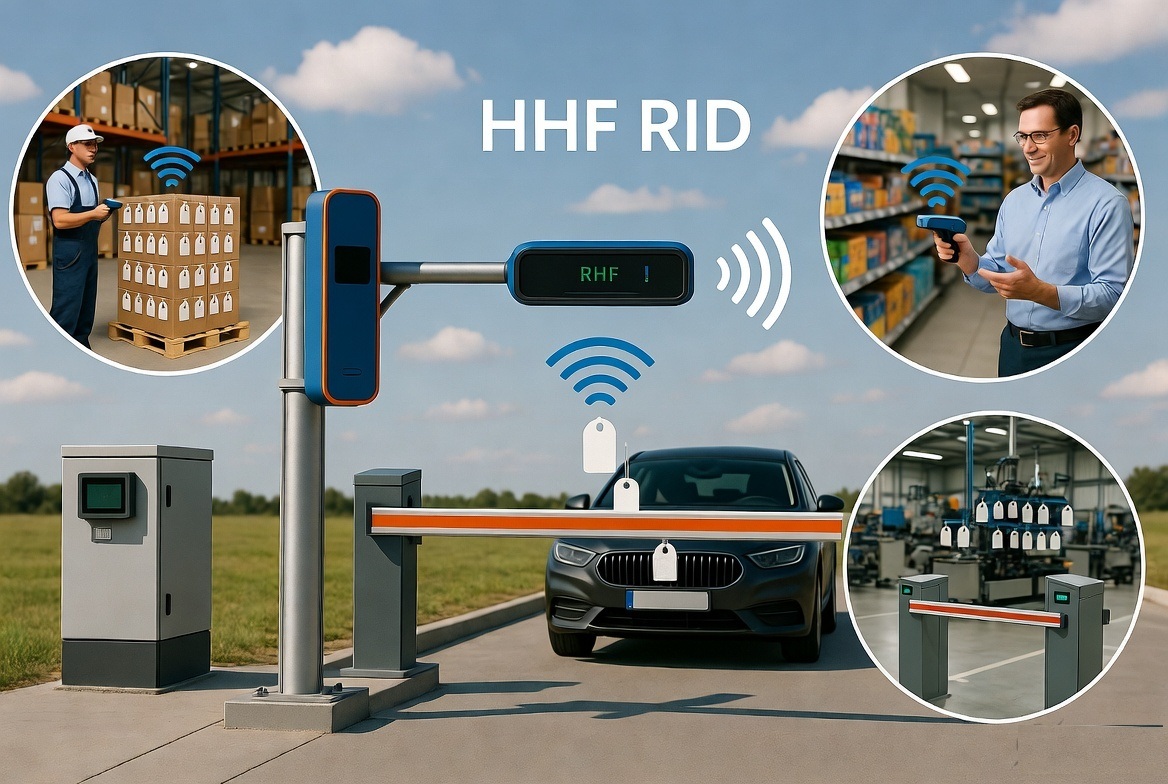
UHF readers installed at entry lanes automatically read windshield-mounted tags from up to 12 m away, opening boom barriers without stopping or window‑down action. Perfect for gated communities, corporate campuses, and staff parking zones.
UHF readers installed at entry lanes automatically read windshield-mounted tags from up to 12 m away, opening boom barriers without stopping or window‑down action. Perfect for gated communities, corporate campuses, and staff parking zones.
🅿️ Parking Management Systems
Integrated with parking software, UHF readers identify entry/exit events, calculate parking duration, and automate fee collection – reducing congestion and eliminating ticketing costs.
Integrated with parking software, UHF readers identify entry/exit events, calculate parking duration, and automate fee collection – reducing congestion and eliminating ticketing costs.
🚚 Logistics & Warehouse Management
At loading dock portals, UHF readers automatically scan pallet and container tags as they enter or exit, feeding real‑time inventory updates directly into WMS or ERP systems. Model MR6021A with 6 m range is optimised for warehouse portals.
At loading dock portals, UHF readers automatically scan pallet and container tags as they enter or exit, feeding real‑time inventory updates directly into WMS or ERP systems. Model MR6021A with 6 m range is optimised for warehouse portals.
🏭 Industrial Asset Tracking
Manufacturing plants use UHF readers to track tools, equipment, work‑in‑process, and returnable transport items (RTIs) – reducing loss and improving asset utilisation.
Manufacturing plants use UHF readers to track tools, equipment, work‑in‑process, and returnable transport items (RTIs) – reducing loss and improving asset utilisation.
🏛️ Government & Defence Perimeters
Secure checkpoints automatically identify authorised vehicles from a distance, maintaining high security while reducing checkpoint congestion.
Secure checkpoints automatically identify authorised vehicles from a distance, maintaining high security while reducing checkpoint congestion.
🏥 Healthcare & Laboratory Asset Tracking
UHF readers track high‑value medical equipment, specimens, and inventory in real time, reducing manual search time and preventing loss.
UHF readers track high‑value medical equipment, specimens, and inventory in real time, reducing manual search time and preventing loss.
🚚 Fleet Management & Logistics Yards
Identify incoming and outgoing trucks, assign bay doors automatically, and synchronise gate events with yard management systems.
Identify incoming and outgoing trucks, assign bay doors automatically, and synchronise gate events with yard management systems.
📦 Retail Inventory & Supply Chain
UHF‑enabled portals at store backrooms automatically count incoming merchandise, perform cycle counts, and trigger reorder alerts without barcode scanning.
UHF‑enabled portals at store backrooms automatically count incoming merchandise, perform cycle counts, and trigger reorder alerts without barcode scanning.
✅ Why eSSL for UHF Readers?
Genuine eSSL Hardware
Factory‑fresh UHF readers (U5, U10, U14, MR6021A) with full manufacturer warranty and strict compliance with eSSL security standards – no grey market or counterfeit components.
Factory‑fresh UHF readers (U5, U10, U14, MR6021A) with full manufacturer warranty and strict compliance with eSSL security standards – no grey market or counterfeit components.
Integrated Antenna All‑in‑One Design
All eSSL UHF readers feature integrated circular‑polarised antennas (up to 8 dBi gain), simplifying installation and reducing wiring complexity compared to external‑antenna models.
All eSSL UHF readers feature integrated circular‑polarised antennas (up to 8 dBi gain), simplifying installation and reducing wiring complexity compared to external‑antenna models.
Weatherproof Outdoor Housing
IP65 or IP66 enclosures, wide operating temperature (-20 °C to +60 °C), and rugged aluminium/ABS construction guarantee continuous operation in harsh outdoor environments.
IP65 or IP66 enclosures, wide operating temperature (-20 °C to +60 °C), and rugged aluminium/ABS construction guarantee continuous operation in harsh outdoor environments.
Multiple Communication Interfaces
All eSSL readers support Wiegand 26/34, RS232, RS485, and Ethernet (on select models) – plug‑and‑play compatibility with any access control panel, barrier gate, or third‑party controller.
All eSSL readers support Wiegand 26/34, RS232, RS485, and Ethernet (on select models) – plug‑and‑play compatibility with any access control panel, barrier gate, or third‑party controller.
High Read Range & Fast Multi‑Tag Reading
eSSL U14 (12 m), U10 (15 m), U5 (12 m), and MR6021A (6 m) deliver adjustable read ranges to match site requirements and read >50 tags per second for high‑throughput portals.
eSSL U14 (12 m), U10 (15 m), U5 (12 m), and MR6021A (6 m) deliver adjustable read ranges to match site requirements and read >50 tags per second for high‑throughput portals.
Seamless ERP & HRMS Integration
Our experts integrate UHF reader logs directly into Spine, GreytHR, HROne, Zoho CRM, Candle, Saral, and Oracle – turning vehicle entry into attendance records, visitor logs, or billing data.
Our experts integrate UHF reader logs directly into Spine, GreytHR, HROne, Zoho CRM, Candle, Saral, and Oracle – turning vehicle entry into attendance records, visitor logs, or billing data.
🛡️ eSSL UHF Reader Family – Models for Every Need
eSSL U5 – Compact All‑in‑One UHF Reader
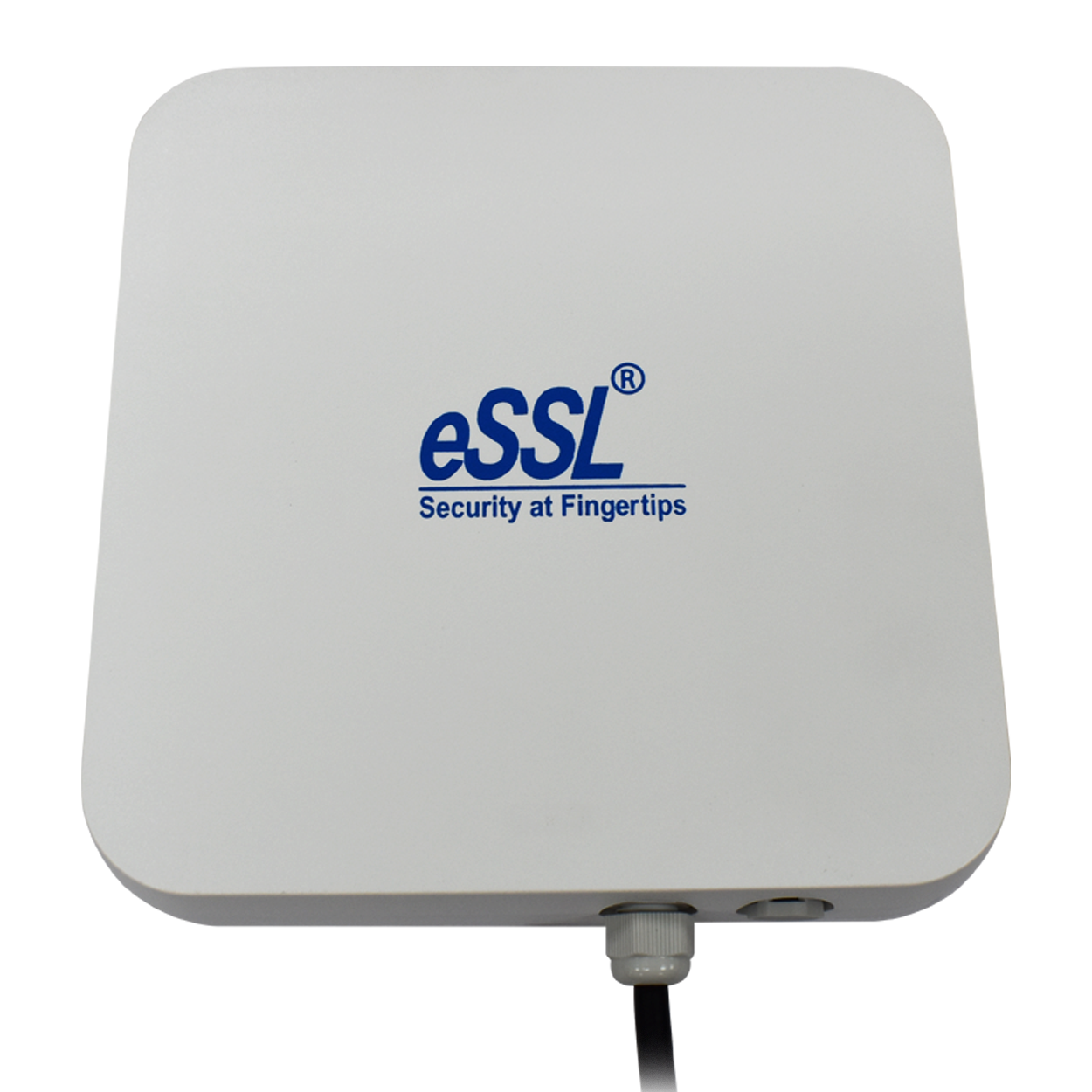
Integrated 8 dBi circular‑polarised antenna, read range up to 12 m, IP65 housing, supports Wiegand/RS232/RS485. Ideal for vehicle gates, parking, and logistics.
Integrated 8 dBi circular‑polarised antenna, read range up to 12 m, IP65 housing, supports Wiegand/RS232/RS485. Ideal for vehicle gates, parking, and logistics.
eSSL U10 – Extended Long‑Range UHF Reader
High‑gain integrated antenna, read range up to 15 m, IP65 enclosure, multiple interface options. Perfect for large‑area vehicle identification and high‑speed logistics portals.
High‑gain integrated antenna, read range up to 15 m, IP65 enclosure, multiple interface options. Perfect for large‑area vehicle identification and high‑speed logistics portals.
eSSL U14 – Flagship UHF Reader
Up to 12 m read range, 8 dBi integrated antenna, IP66/IP67 protection, and full interface support (Ethernet, RS485, Wiegand). Built for demanding outdoor installations requiring extreme reliability.
Up to 12 m read range, 8 dBi integrated antenna, IP66/IP67 protection, and full interface support (Ethernet, RS485, Wiegand). Built for demanding outdoor installations requiring extreme reliability.
eSSL MR6021A – Mid‑Range Integrative Reader
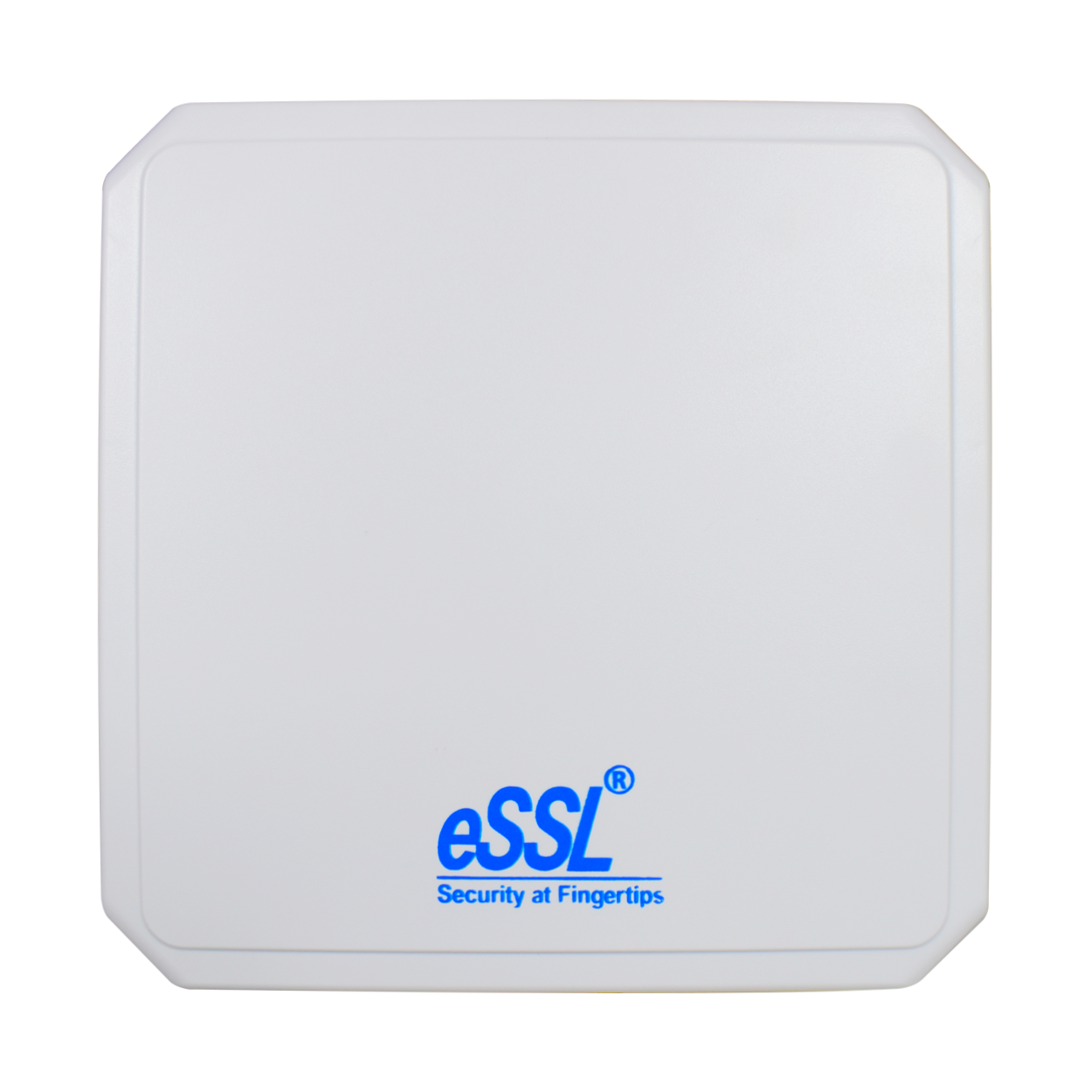
6 m read range, compact design (240×240×30 mm), ISO18000‑6B/‑6C protocol, supports programmable trigger/timing modes. Optimised for warehouse portals, production lines, and library management.
6 m read range, compact design (240×240×30 mm), ISO18000‑6B/‑6C protocol, supports programmable trigger/timing modes. Optimised for warehouse portals, production lines, and library management.
🔗 How to Integrate a UHF Reader with Your Security System
📦 1. Mount the Reader
Install the UHF reader on a wall, pole, or gate structure at the designated entry point (height 1.5‑2.5 m, angled towards the tag zone). All eSSL readers feature wall/pole mounting options.
Install the UHF reader on a wall, pole, or gate structure at the designated entry point (height 1.5‑2.5 m, angled towards the tag zone). All eSSL readers feature wall/pole mounting options.
⚡ 2. Power & Network Connections
Connect DC 9‑12 V power; enable Ethernet or RS485 for network‑based configuration and event logging to a central server.
Connect DC 9‑12 V power; enable Ethernet or RS485 for network‑based configuration and event logging to a central server.
📋 3. Configure Read Mode & Wiegand Output
Set the reader to “always read” or “trigger read” mode, and select appropriate Wiegand 26‑bit or 34‑bit output to match your access control panel. Adjust output power (5‑33 dBm) to tune read range.
Set the reader to “always read” or “trigger read” mode, and select appropriate Wiegand 26‑bit or 34‑bit output to match your access control panel. Adjust output power (5‑33 dBm) to tune read range.
🚪 4. Connect to Boom Barrier / Gate
Wire the reader‘s relay outputs directly to the boom barrier controller. Upon tag authorisation, the reader sends a dry‑contact pulse to trigger the barrier to open.
Wire the reader‘s relay outputs directly to the boom barrier controller. Upon tag authorisation, the reader sends a dry‑contact pulse to trigger the barrier to open.
❓ Frequently Asked Questions – UHF Reader
What is a UHF reader?
A UHF reader is a device that uses Ultra-High Frequency radio waves to communicate with and read data from specially designed tags (UHF RFID tags), without needing direct contact between the reader and the tag.
How far can a UHF reader read?
Typical passive UHF readers achieve read distances of 3 to 12 meters, depending on the reader’s power, antenna gain, and the quality of the UHF tag. High-performance readers like eSSL U10 can read tags up to 15 meters away.
What is the difference between a UHF reader and HF RFID reader?
UHF readers operate at 860–960 MHz and offer long read ranges (up to 12 m) and high-speed multi-tag reading, making them ideal for vehicle access, logistics, and warehouses. HF readers operate at 13.56 MHz, with a short read range of 10–50 cm, suitable for payments and ID cards.
What are the main applications of a UHF reader?
UHF readers are widely used in vehicle access control, parking management, logistics and warehousing, retail inventory management, asset tracking, manufacturing, and supply chain automation, among many others.
Can a UHF reader be used outdoors?
Yes, many UHF readers are designed with IP65 or IP66 weatherproof enclosures, allowing them to operate reliably outdoors in rain, dust, and extreme temperatures (-20 °C to +60 °C).